Understanding different types of XBRL reports

Published Sep 08, 2026  | 4 min read
  • Image of Janis Steinmann

    Janis Steinmann

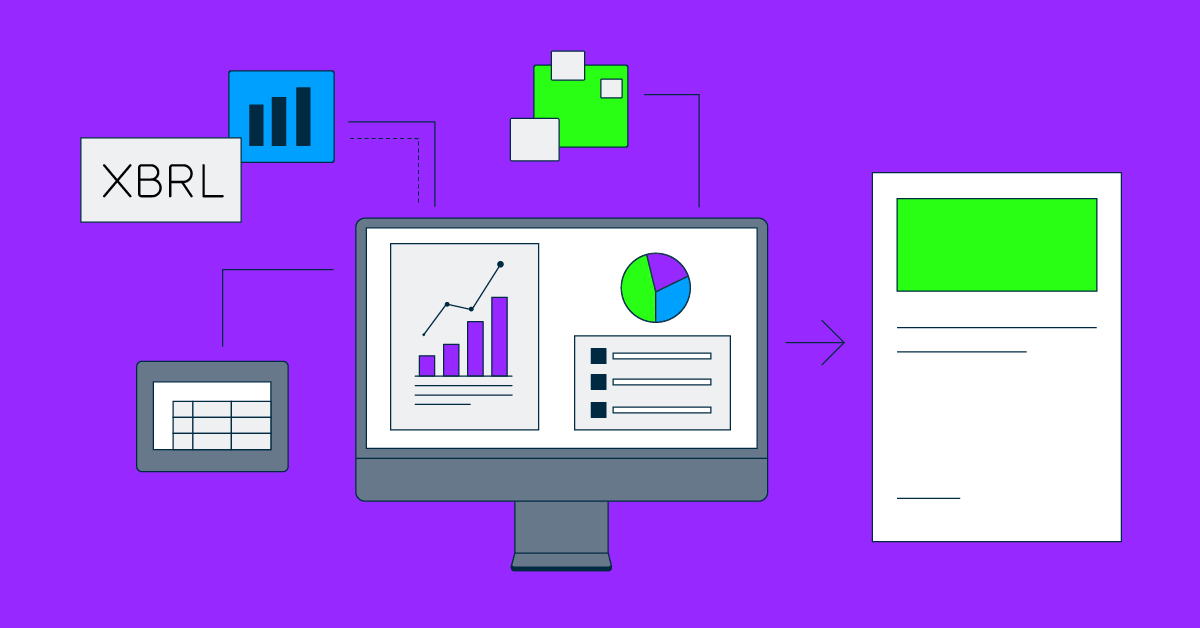
Financial reporting is an integral part of the business mechanism, and with the digital era, companies are turning towards more systematic, transparent, and standardized approaches such as XBRL (eXtensible Business Reporting Language). XBRL acts as a global standard for exchanging business information and is widely adopted for regulatory reporting. However, not all XBRL reports are created equal. In this blog post, we're diving into the different types of XBRL reports: Classic XBRL without a table linkbase, Classic XBRL with a table linkbase, and InlineXBRL.


Classic XBRL (without tables)

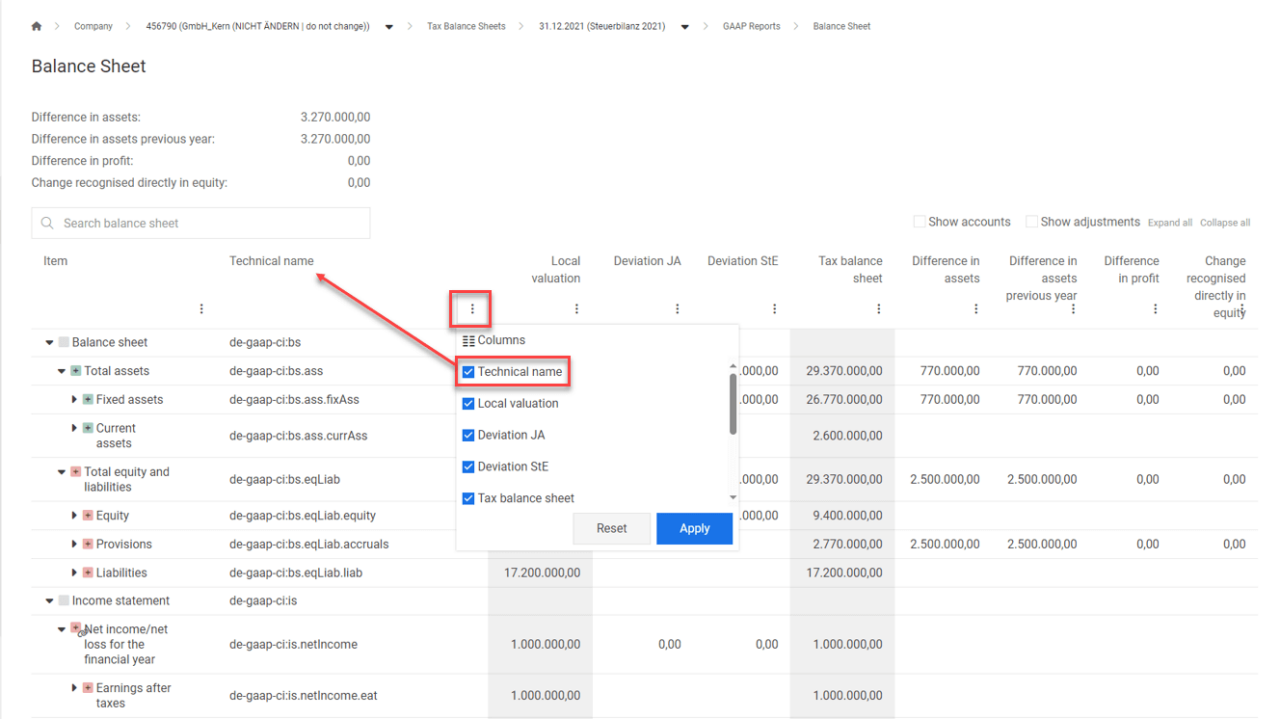
Classic XBRL without a table linkbase is the most straightforward form of XBRL. It represents financial data using elements and dimensions but doesn't structure this data into tables. Instead, the taxonomy provides a hierarchical structure called the Presentation Linkbase. This form is mainly used for simple, straightforward regulatory reporting where multidimensional data tables are the exception.

Examples

A notable example is the German E-Bilanz, but also local reporting in Italy and the Netherlands use this approach. These reports are designed to facilitate electronic tax filing and compliance with local regulations.

Pros

  • Simplicity: Easier to create and implement compared to more complex XBRL versions.
  • Familiarity: Well-known and widely used formats, making them accessible for finance professionals with minimal XBRL expertise.
  • Reduced Complexity: Mostly accounts can be mapped with simple 1:1 relationship to concepts from the taxonomy.


Cons

  • Lack of structure: The absence of tables can make large datasets harder to manage and understand at a glance.
  • Limited data dimensions: Complex datasets with multiple dimensions and relationships cannot be efficiently represented.


Software support 

Lucanet provides a dedicated software for the creation of the German e-Bilanz. With our TaxBalance solution as part of the GlobalTaxCenter, our customers can not only draw on the features of our certified XBRL engine but can also make use of tailor-made tax accounting functionalities.

For other local GAAPs following this approach our XBRL Cloud offers the possibility of either manually entering the data into automatically generated forms, or connecting your consolidation system to Lucanets solution for a more streamlined reporting process.


Classic XBRL (with tables)

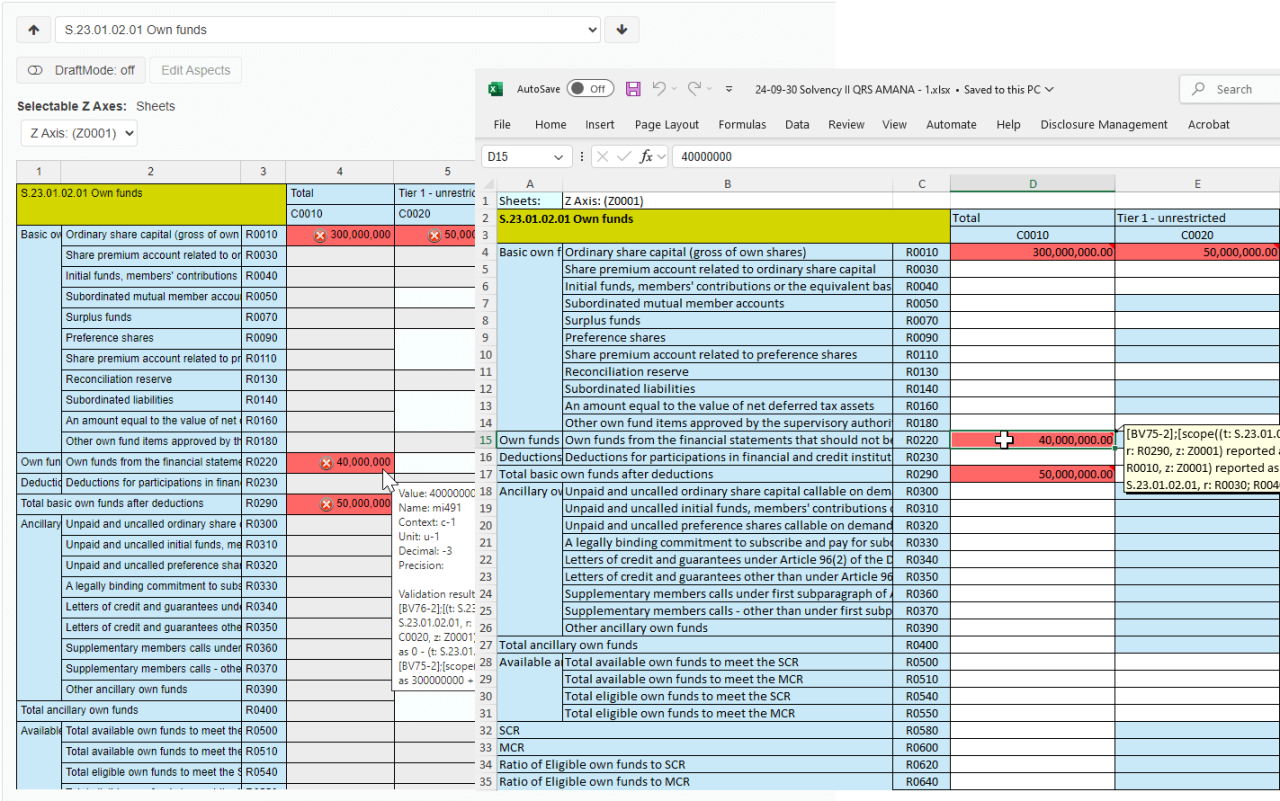
Classic XBRL with a table linkbase incorporates tables into the reporting structure, allowing for better organization and presentation of multidimensional data. The table structure is fixed as part of the taxonomy. This adds an extra layer of complexity but provides much-needed structure for detailed and comprehensive reports.


Examples 

Examples include FINREP (Financial Reporting) and COREP (Common Reporting) from the EBA, and Solvency II from EIOPA, which are utilized across the European Union for regulatory purposes, specifically within the banking and insurance sectors.

Pros

  • Enhanced structure: Tables allow for a clearer, more organized presentation of data, which is particularly useful for large and complex reports.
  • Regulatory compliance: Meets the stringent requirements of financial regulators, ensuring compliance with local and international standards.


Cons

  • Complexity: More challenging to create and require a deep understanding of the XBRL taxonomy and table structures.
  • Higher costs: Implementation and maintenance can be more expensive and resource-intensive.


Software support

Our XBRL Cloud excels at working with Table Linkbase-enabled reporting requirements. The XBRL Cloud is a versatile XBRL creation and management platform that is used by both regulators and filers alike. The Table Linkbase support allows for a straightforward visualization of complex financial information and validation results. The XBRL Cloud also leverages the additional table information to streamline interfaces to a range of consolidation systems, allowing for the fast and reliable creation of complex XBRL reports.

A growing number of European regulators are using this solution to validate and manage incoming reports and provide their filers with insights. 


InlineXBRL

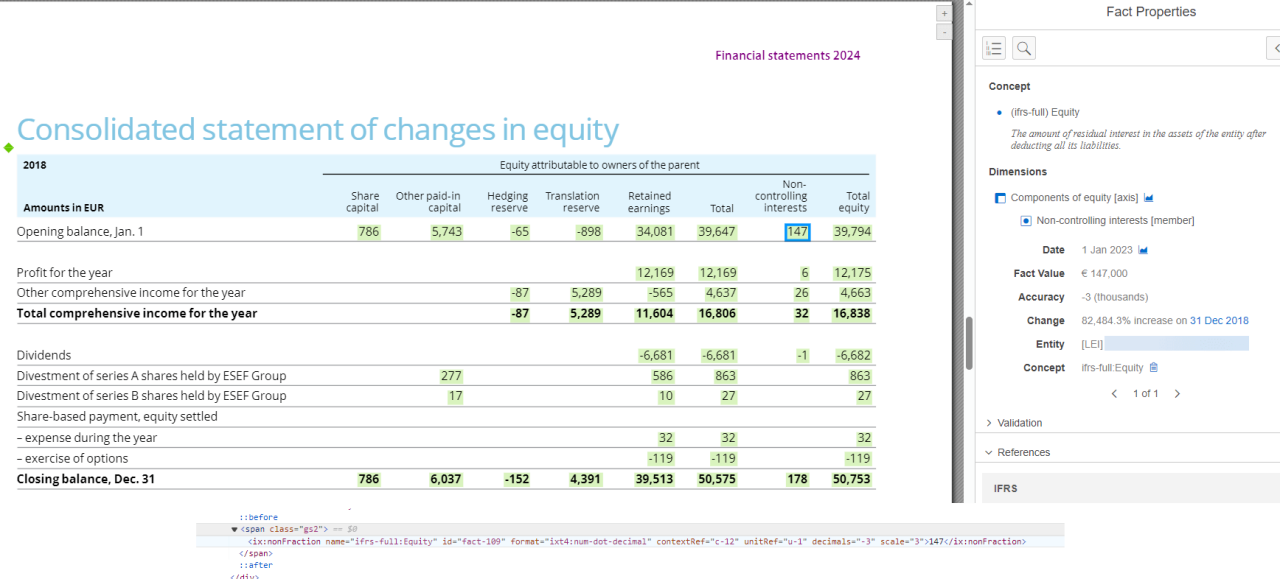
InlineXBRL (iXBRL) combines the machine-readable format of XBRL with the human-readable format of traditional financial statements, embedding the XBRL data directly into an HTML document. This format allows users to view and interact with data on a webpage while maintaining the detailed tagging required for automated processing.


Examples

ESEF (European Single Electronic Format) and ESRS (European Sustainability Reporting Standards) are prime examples. ESEF is mandatory for issuers on EU-regulated markets. ESRS applies to large public-interest companies that meet the EU’s current size thresholds, narrowed under the 2025 Omnibus simplification package alongside adjusted reporting timelines. Together, the two formats improve the transparency and comparability of financial and sustainability disclosures across the EU.

Pros

  • Readability: Combines the advantages of electronic tagging with a format that is accessible and easy for humans to read. 
  • Versatility: Supports a wide range of financial data and presentations, making it highly adaptable to various reporting needs.
  • Interactivity: Users can interact with the document, extracting the tagged data as needed.


Cons

  • Implementation challenges: Creating and validating iXBRL reports can be technically challenging and may require specialized software and expertise.
  • Resource-intensive: Development and maintenance of iXBRL reports tend to be more resource-intensive compared to simpler XBRL formats.


Software support

Lucanet offers the market-leading ESEF software, the XBRL Tagger, as a solution for InlineXBRL reporting. The XBRL Tagger can be used for all InlineXBRL reporting requirements, like ESEF, UKSEF, ESRS, CIPC IFRS reporting and many more across the world. For this bolt-on solution reports can be created from Microsoft Word or PDF documents and will be automatically converted to valid XHTML. A straightforward process hides the complexity of the XBRL requirements and allows the user to focus on the tagging process itself. Advanced roll-forward and auto-tagging features are real time-savers and provide flexibility when it comes to planning the reporting year.

The Tagger Agent goes beyond adding AI on top of manual tagging: it changes the task itself. Instead of creating tags line by line, you review AI-generated taxonomy proposals for every numeric fact and narrative block, sorted by confidence so straightforward items can be accepted in bulk while your judgment goes where it is actually needed. It also removes a common source of filing errors by setting up the technical project configuration automatically for the selected mandate and filing year. Nothing is applied without your confirmation, but the effort involved drops by up to 95%, with no implementation project or IT involvement required.

Our Disclosure Management tool offers a built-in solution for InlineXBRL reports. The leading editorial platform increases the efficiency in the creation of annual reports and offers an end-to-end process with data management.


Conclusion

Each type of XBRL report – Classic XBRL (with or without tables) and InlineXBRL – serves specific purposes and comes with its unique set of pros and cons. Regulators choose the type that best fits the needs of the authorities and the market alike. Understanding these formats is crucial for finance professionals tasked with regulatory reporting, compliance, or simply navigating the evolving landscape of financial data exchange.

Lucanet offers specific and tailor-made software for all the different use-cases of XBRL. Just let us know what you need!

Next time you encounter the term XBRL, think beyond the acronym and consider how these standardized formats can impact and potentially enhance your financial reporting practices.
 

Curious to learn more about Lucanet's way for disclosure management and ESEF reporting?

Discover Lucanet Disclosure Management

  • Image of Janis Steinmann

    Janis Steinmann

    Janis Steinmann is Head of XBRL at Lucanet, leading the company's XBRL team while positioning XBRL solutions as a cornerstone of Lucanet's CFO Solution Platform. He also serves as Chair of XBRL International's Best Practice Board and member of ESMA's Disclosure Working Group within the Data Standing Committee.

    Janis brings over a decade of expertise in structured digital reporting, specializing in the convergence of AI and XBRL technologies. He leads product strategy for Lucanet's XBRL suite (Tagger, Cloud, and Auditor), driving innovation in areas like AI-powered tagging automation.

    Janis has successfully delivered XBRL projects for major European banks, insurers, regulators, and listed companies across multiple regulatory frameworks including ESEF, UKSEF, CSRD, and Dutch SBR. His deep collaboration with customers' finance and reporting teams provides unique insights into the practical challenges of digital reporting implementation and management.

    His expertise spans the full spectrum of structured reporting: from iXBRL and XBRL-CSV implementations to taxonomy development, validation frameworks, and emerging standards, always with a focus on reducing the reporting burden while enhancing data quality and regulatory compliance.

Contact Us