
Smarter models, faster: intelligence in financial planning
Building a financial model from scratch has always been a specialist's job. You need to know which variables matter, how to structure the formulas, and how to connect the model to the actuals underneath it. For most teams, that setup alone takes days, and is dependent on one or two people who know the model architecture well.
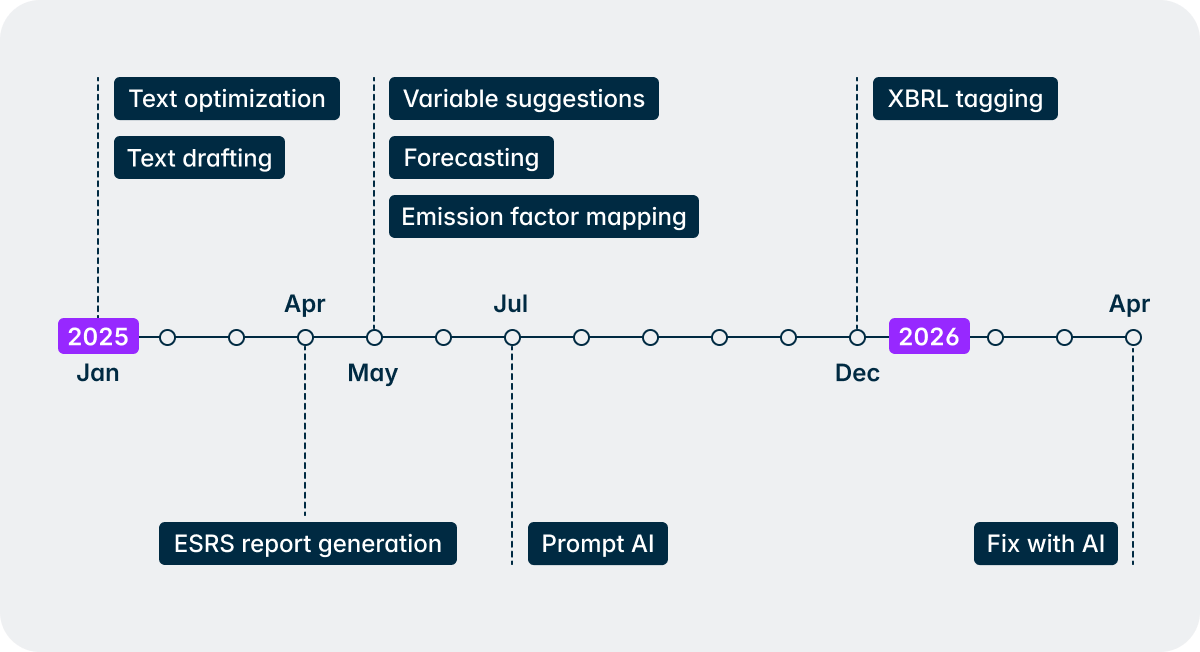
We started shipping intelligent modeling features in xP&A in May 2025. Not as a single big launch, but as a deliberate sequence.
From AI-suggested variables to fixing errors in one click
First came AI-generated variable suggestions: the system analyzes what is already in the model and proposes what comes next, including names, formulas, and hardcoded assumptions. Finance teams accept or reject suggestions individually. The blank-canvas problem, the hours spent figuring out how to start, goes away.
Then AI-assisted forecasting: instead of manually defining a forecast methodology, the system analyses historical data and generates the most likely projection. A starting point that used to take hours arrives in seconds.
Then Prompt AI, in July 2025: describe what you want to calculate in plain language, and the system proposes the variables and structures needed to produce it. And most recently, in April 2026, Fix with AI: hover over an error, click once, review the proposed correction. What previously required debugging expertise now takes a single interaction.
Taken together, these features reduce the time to build and maintain a financial model significantly. Each one hands the result back to the finance professional for review. The model stays theirs. These are the early innovations in xP&A. The next step is not a feature, it is a workflow.
Intelligence in ESG Reporting: Automated emission factor mapping
Greenhouse gas (GHG) footprint calculation is a task finance teams are increasingly responsible for but rarely trained to do. Matching emission sources to the right emission factors across all scopes requires either specialist knowledge or expensive external support. Most teams have neither.
What we built in ESG Reporting removes that dependency. Teams upload their consumption data, and the system maps each entry to the correct emission factor automatically across scopes 1, 2 (location- and market-based), and 3, reducing the required GHG expertise. Every mapping comes with a confidence score. The team reviews, overrides where needed, and moves on.
The result is generating GHG footprints five times faster than with manual emission factor mapping. For teams under CSRD pressure, that’s the difference between meeting a deadline and missing it.
From blank page to board-ready annual reports
Annual report creation sits at the end of the hardest part of the finance calendar. By the time teams reach the drafting stage, they are already under deadline pressure, staring at dozens of disclosure requirements that need to be written, reviewed, translated, and aggregated across entities.
We introduced intelligent writing capabilities in Disclosure Management in January 2025.
Drafting and optimizing texts with intelligence
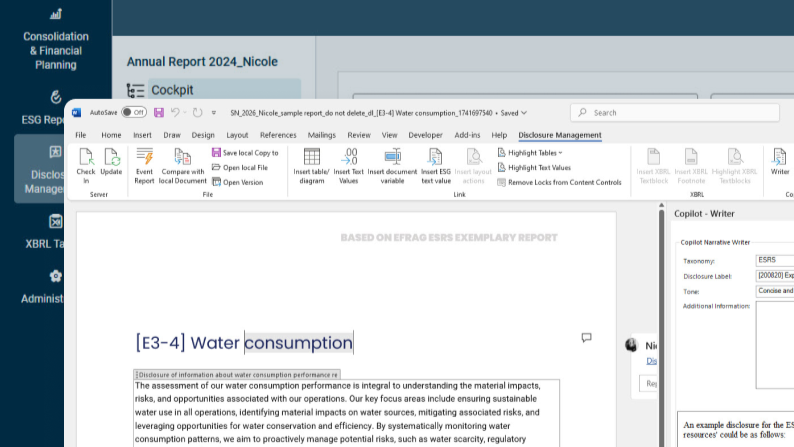
Two functions came first: text optimization (adjusting tone, shortening, expanding, translating, summarizing), and taxonomy-compliant text drafting. For any ESRS or IFRS disclosure label, the system generates a compliant draft. Teams provide company-specific context; the system incorporates it. The report language and layout are applied automatically.
ESRS-compliant group reports
By April 2025, we added group-level ESRS report generation: for organizations with multiple reporting entities, the system consolidates subsidiaries' questionnaire responses and generates a final, ESRS-compliant sustainability report at the group level. Teams select which inputs to include, add supplementary information, and can regenerate until the output meets their requirements. What used to take hours of manual aggregation across entities now happens in a single guided process in minutes.
Regulatory filing without the specialist bottleneck: XBRL Tagger
XBRL tagging is one of those tasks that sounds technical because it is. Since 2020, listed EU companies have been required to file in the Inline XBRL (iXBRL) format. The tagging process of matching report elements to taxonomy concepts across thousands of line items has historically required specialist consultants. For most mid-market finance teams, that meant meaningful cost and external dependency every filing cycle.
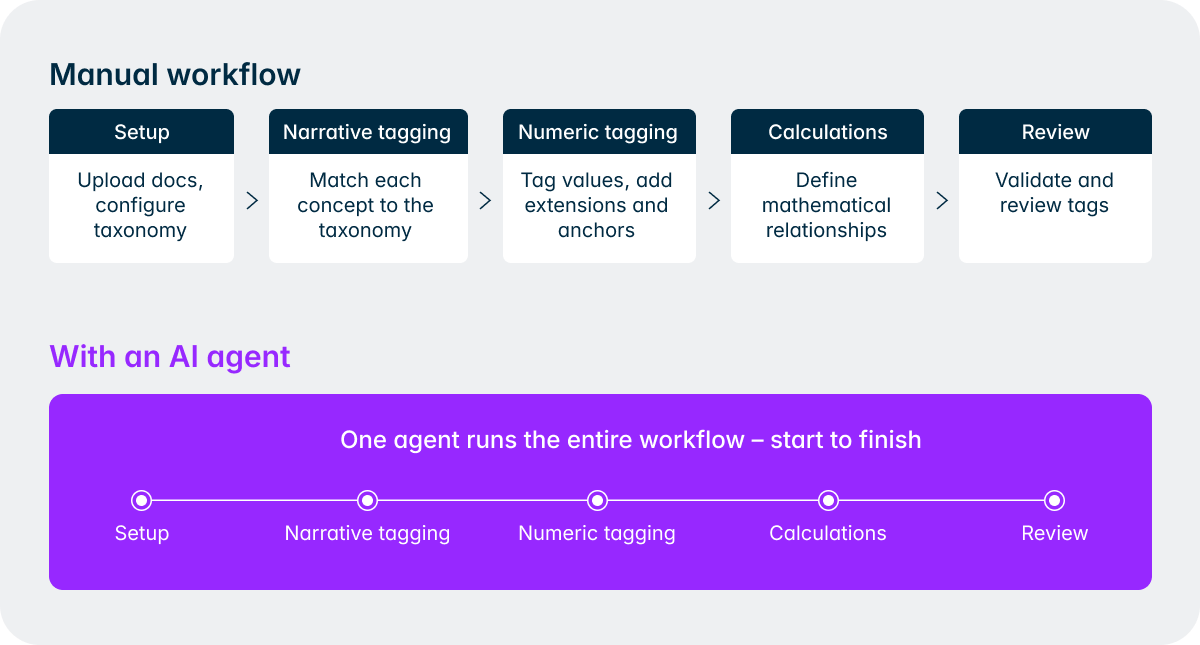
In December 2025, Lucanet launched the Tagger Agent, becoming the first in the market to ship a comprehensive AI agent for XBRL reporting. Teams upload their annual report and the Tagger Agent handles narrative tagging, numeric table tagging, and calculation generation automatically. No implementation project, no IT involvement, and no need for consultant support. The Tagger immediately loads any valid taxonomy, including ESEF and local GAAP variants such as Dutch GAAP, pCBCr, and OCW, and produces iXBRL output that meets current regulatory requirements.
Once the mapping is done, it transfers automatically to the following year. The specialist bottleneck does not return.