
Markets move fast, and the uncertainty companies operate under keeps rising. BARC's own analysis of the planning software market points to the same pressure again and again: forecasts need updating more often, in shorter cycles, and with more of the available data actually put to use, not sitting static in a spreadsheet. It's a big part of why BARC has seen fewer companies relying on Excel for planning in recent years.
That's the shift BARC, one of Europe's most established independent analyst firms, has been tracking for years through its annual planning software survey: now one of the field's most widely cited, peer-based benchmarks.
Keep reading to see exactly where Lucanet ranked, and why it matters.
Inside the numbers: what the survey actually covers
BARC's own analysis reveals a consistent set of requirements for effective planning: access to current, reliable information, the capacity to model various future scenarios rather than committing to a single, static plan, and sufficient automation to prevent planners from performing all tasks manually. Meeting these needs depends on adaptable software rather than a faster way to update a spreadsheet.
This year's edition draws on 804 responses, spanning 20 vendors and scoring against 26 KPIs, covering everything from simulation depth to day-to-day usability. The Planning Survey 26 is your one-stop guide to choosing the right software for planning, budgeting and forecasting. It is the world's largest business planning survey.
Find out what makes Lucanet a standout leader among other planning software providers.
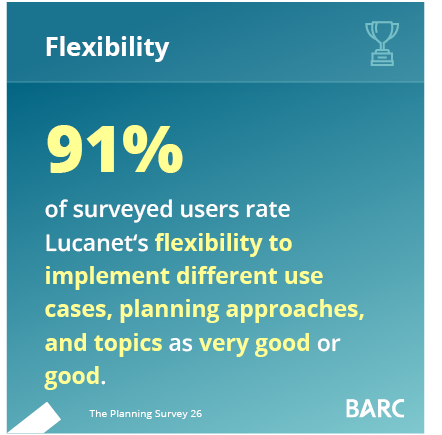
What Lucanet users actually reported
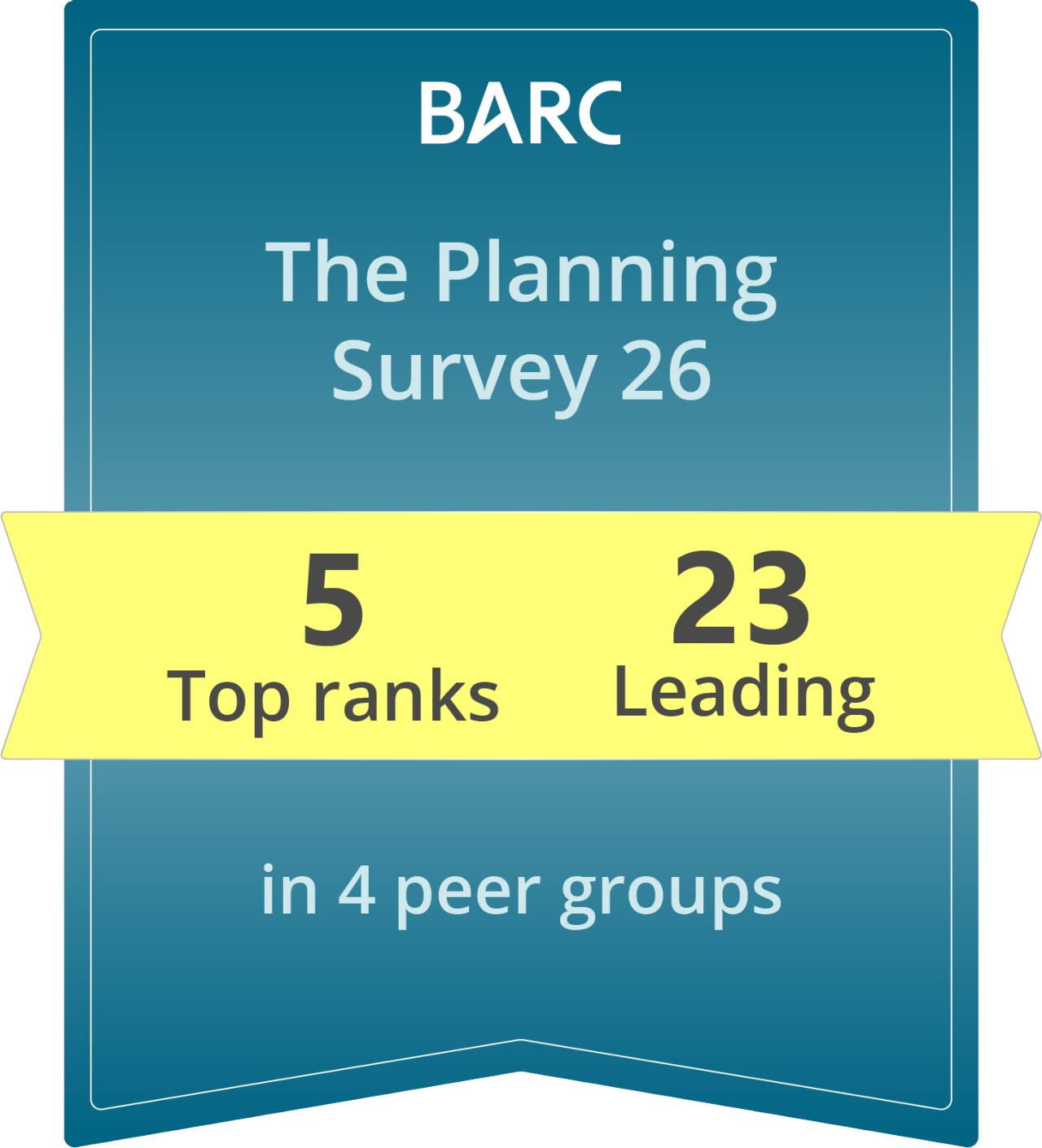
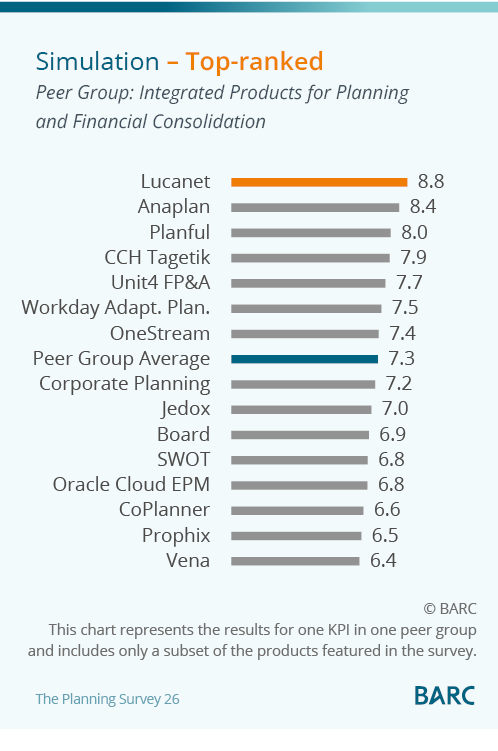
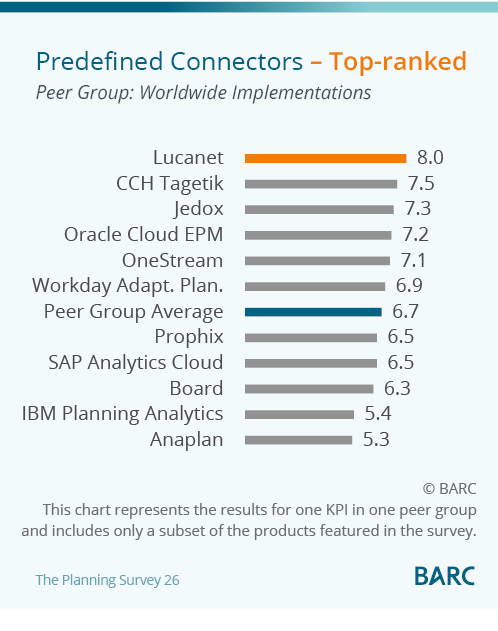
Lucanet achieved 5 top-ranked positions and 23 leading positions in The Planning Survey 26.